


Living With Tinnitus: Advice From 20 Years of Ringing Ears
I’ve been living with tinnitus for 20 years. For those not familiar with it, tinnitus is a phantom sound — you can hear it, but it doesn’t have an external source. The condition can be quite debilitating and there’s currently no cure for it.
Tinnitus has definitely had a big impact on my life. The noise usually gets worse with stress, so it can make working very difficult or doing exciting things like building your own business or starting a freelance career.
But, for the most part, I live with it well. That’s primarily because, over the years, I have developed strategies that allow me to have a good, enjoyable, and productive life despite my ear condition. And in this post, I want to share what I’ve learned in the hopes of helping others.
Note that I can mostly only speak to living with tinnitus brought on by stress and psychological causes, since this is how I acquired mine. There are many other ways to get tinnitus, from hearing trauma and ear infections to ototoxic medication or vascular issues. I don’t have experience with that, so my advice, especially for the early days, may not apply to your case. On the other hand, I think the general techniques to managing tinnitus are very similar across the board.
Obligatory disclaimer: I am not a medical professional, nor do I play one on TV. Nothing in this article should be taken as medical advice, I’m simply sharing my own experiences and what works for me.
My Tinnitus Story
Every person with tinnitus has a different story of how it started for them. My tinnitus was most likely brought on by a mix of hearing damage and stress/anxiety, while it’s my belief that the stress part was the more decisive factor.
I did play drums without hearing protection in my youth and I have some slight hearing loss in higher frequencies on one side. I also had instances where my ears would make noise intermittently when I was a teenager. But, after starting to use ear protection, the problem pretty much went away.
Until one fateful day in 2007.
Stress, Anxiety, and the Road to Tinnitus
I had just come back from a year abroad in China, which had been one of the most stressful times of my life. For the last three months of it, I had struggled with massive mental health problems.
Part of it was due to the unfamiliar, stressful environment. Beijing was not an easy place to live in terms of pollution, overwhelm, and the sheer number of people. Part of it was also simply because of my personality. I have always been a bit prone to anxiety and overthinking and my 21-year old self was rather insecure.

At the same time, I was putting immense pressure on myself to make the most of my time in China in terms of language learning, socializing, traveling, and general life experience. This didn’t leave enough time for rest. I simply didn’t know how to properly take care of myself and protect my mental health.
All of that culminated in a panic attack I had on an inner-Chinese flight and it sort of spiraled from there.
The experience kicked into gear a fear of flying, which in turn created the question, “how the fuck am I going to get home?” For weeks, I was plagued with visions of panicking on the nine-hour flight back to Germany.
Plus, the stress surfaced a childhood trauma that I hadn’t dealt with properly and that weighed heavy on me. Finally, I had just started a relationship with someone and felt very much obligated and responsible for being a proper partner — despite being absolutely messed up.
It was quite the cocktail for ridiculous amounts of anxiety and depression and not a good time in my life.
T-Day
The good news is: I did make it home (obviously).
The bad news: I continued to struggle and mount more stuff on my head:
- The childhood trauma needed dealing with.
- I had a long-distance relationship where I felt responsible for showing up.
- While still in China, I had decided I was going to move from my hometown, where I had started university, to Berlin, a city I had never even visited before.
So, to nobody’s surprise, one day that summer, when I was playing drums at my parents’ house to relax (wearing hearing protection), one of my ears started ringing and didn’t stop.
I immediately panicked and it didn’t get any better from there. I’ll spare you the rest of the details and the many other dumb decisions I made after that (which, among others, involved getting on a plane to Los Angeles while still terrified of flying, and going through with the Berlin move instead of taking time off to rest and care of myself).
The fact of the matter is that I’ve had tinnitus ever since.
Today’s Status Quo
As it happens for many people who live with tinnitus, the noise in my ear has changed over time. It started as a high-pitched tone in one ear, which has since moved to both ears. Additionally, other noises have added themselves to the mix over the years. Depending on my stress level or lack of sleep, I may also hear a hissing or a low-pitched hum.
However, my “normal” tinnitus is mostly just the original high-pitched tone — it’s around 1700 hertz, or an A6/A#6 on the scale. Below is kind of what that sounds like (make sure to turn down your sound first!).

By loading the video, you agree to YouTube’s privacy policy.
Learn more
I’m also lucky in that my tinnitus is relatively quiet. It is easily drowned out by playing music or being outside or around other people. I mostly hear it when I’m in a quiet environment. Therefore, I would place myself square in the “moderate tinnitus” area.
And yet, it’s been one of the things I’ve struggled most with throughout my life, especially during spikes. That’s when the sound gets really loud and drowns out everything else. It can last for several hours, days, even weeks or months until it returns to baseline.
There have been many situations when I thought, “This is it, it’s all over, my ears are finally broken, and I can no longer live a normal life.” I’ve also had a long-standing fear of losing my hearing.
What sucks is that nobody can help you. Like every other person afflicted by tinnitus, I’ve seen many doctors and the process is always the same: they do a hearing test, tell you everything’s normal, maybe prescribe some medication that improves circulation, and otherwise advise you to take it easy and focus your attention on something else. It can be quite maddening and in terms of usefulness sometimes reminds me of this scene from It’s Always Sunny in Philadelphia.
By loading the video, you agree to YouTube’s privacy policy.
Learn more
However, we are not here to focus on the negatives but to talk about effective strategies for living with tinnitus. So let’s do that.
Dealing With Acute Tinnitus: Tips for the Beginning
If you are here because you acquired tinnitus recently and are looking for guidance, here’s what I would do if I could go back in time.
1. See the Doctors
As mentioned, tinnitus can be brought on by many different factors, not all of them stress-related. So, the first step is to make sure there isn’t anything organically wrong with you that needs to be fixed or medicated.
You may go through the less-than-fun experience of doctors telling you that, on paper, you’re healthy and they can’t do anything for you, but it’s better than staying in the dark.
So, go see your house doctor, ENT, and wherever else they send you to cover your bases.
2. Listen to What Your Body is Trying to Tell You
With a stress-related tinnitus, the first thing to understand is that the noise itself isn’t the problem — it’s a symptom of the problem. It’s the messenger trying to tell you that something isn’t working in your life, that your system is overtaxed, and your body is crying for help and trying to get your attention.
So, your first goal shouldn’t be to get rid of the tinnitus, but to address what’s behind it.
A useful metaphor I once read is that tinnitus is like a smoke alarm. When it goes off because your house is on fire, your first priority isn’t turning off the smoke alarm, it’s to put out the fire and get yourself to safety.

Looking back on it, I wish I’d spent more time trying to understand what tinnitus was trying to tell me — that my life was completely out of control, I was asking impossible things of myself, and was more invested in other people’s wellbeing than my own.
So, instead of continuing business as usual and googling tinnitus horror stories, I wish I’d had the courage to make some important and long overdue changes in my life.
3. Prioritize Yourself
What changes you ask? Well, for starters, instead of moving to a city I’d never been to, trying to keep a long-distance relationship from ending, and doing everything I thought other people were expecting of me, I would have pulled the emergency brake.
If I could go back in time, I’d probably take a semester off, stay with my parents, and give myself time to regroup. Berlin would’ve waited, relationships would’ve waited — or, if they wouldn’t — everyone would’ve survived. Nothing catastrophic would’ve happened if I’d just said, “This is all too much for me, I need time and space to figure my shit out.”
You may be in a similar situation, with things in your life that feel like emergencies but aren’t. In fact, common personality traits among people living with tinnitus are to assume too much responsibility, be perfectionists, and/or people pleasers (guilty as charged over here).
As someone who has gone through this, I can tell you, self-sacrifice isn’t heroic. No one hands out medals at the end of life for “fucked themselves up the most to keep other people happy.”

Is someone going to die if you say no to something? Then in 99.999% of the time, you can de-prioritize it.
Drop everything that is not absolutely essential and critical for preserving your life and livelihood. Call in sick. Go on vacation. Nuke your calendar. Tell people to fuck off.
Yes, there may be fallout, but allow shit to happen. Let stuff break, people be pissed, and others handle their own crises. You are the priority now, your body is screaming at you to do something. It’s time to listen.

4. Take Your Focus Off the Sound
This one is easier said than done. In the acute phase of my tinnitus, I frequently checked to see if the sound was still there, which isn’t a good idea. It reinforces the attention you give to the ear noise and your negative reaction to it.
As I said, it’s a symptom of a problem, not the problem itself. Try to shift your attention from trying to fix the sound to fixing the circumstances that cause you to be stressed.
An important part of that is to do pleasant things that relax you and naturally help you distract yourself. Play music or other sounds when you are in a silent environment, go for walks, spend time with friends and family, work out, go to the movies, go bowling, get a massage — whatever helps you get out of your head.
Additionally, try not to isolate yourself and binge TV shows, get drunk, or play video games to no end. Doing some of that is fine (except the getting drunk thing) if it truly helps you relax and distract yourself, but don’t use it as a vehicle for social isolation.
5. Don’t Put a Clock on It
In hindsight, one of the most detrimental things I did was to give myself a timing for when my tinnitus had to be gone. When you research the condition online, you come across certain numbers that say “if it’s not resolved by X months, it’s probably permanent.”
While there is truth to that, it’s not a hard and fast rule. When you look at success stories on tinnitus forums (which can be helpful, though spending too much time on there can also be detrimental), you can see that some people’s tinnitus still resolves after a year or longer.

I’ve also developed a secondary tinnitus several times in my life that was there for months and I was sure I was going to have to live with it, only for it to resolve when my life became less stressful.
The reason I am bringing this up is because, for me, putting a clock on it was just another stress factor. I was basically counting down the days until when I had to be “healed” before some “horrible fate™” awaited me. Every morning, I would wake up and check if the sound was still there and then query my internal calendar for how much time I had left for it to resolve.
All of this just made me more anxious and was another distraction from dealing with the things that had brought on my tinnitus. So, while you shouldn’t take this as an excuse for inaction and just waiting it out, do take it as a prompt to not pressure yourself more than you may already be doing.
6. Talk to Somebody
Another thing that I would change if I could go back in time is not fight this battle all by myself. While I was vocal about that I wasn’t doing well, there was a whole lot of stuff going on inside me that I didn’t share with anyone. If I had, maybe I wouldn’t have made so many decisions that were detrimental to my wellbeing.

Best case scenario, you have a spouse, trusted friend, family member, or someone else close by you can confide in. If not, a counselor, therapist, or someone else who listens professionally can be an alternative or even a valuable addition. Mental health professionals can help you unpack what’s going on, where your stress is coming from, and how to make meaningful changes.
Note that talking isn’t necessarily about fixing everything. It’s more about getting things off your chest, discussing your fears, the thoughts in your head, and all the shit you may be feeling.
Don’t go it alone. And if you feel like you have to, that may be part of the problem.
7. Learn Calming Techniques
Much of the stress that led to my tinnitus was self-generated. I’d spend a lot of time ruminating on the same problems, constantly reinforcing the tension. I didn’t have an effective circuit breaker that allowed me to stop the cycle. That’s stuff I would learn later.
Finding ways to physically relax your body can make a huge difference in how you cope. This is a bit personal, what works for one person may not work for another (for example, progressive muscle relaxation never really did it for me).
Here’s what I find helpful:
- Go for walks, preferably in nature: Nature walks have been scientifically proven to be relaxing. When I walk for just 20-30 minutes, it often completely changes how I feel.
- Practice breathing techniques: Breathing properly helps activate the parasympathetic nervous system, which is the part that’s responsible for calming us down. It can be as easy as inhaling through your nose and slowly exhaling through the mouth for 10 breaths. I also like box breathing, where you inhale, hold your breath, exhale, and hold again for 4-5 seconds each.
- Read: Reading is one of the best ways to occupy your mind while also resting. It’s also simply to do. Highly recommended!
- Try meditation: More of a long-term strategy, meditation is great for both practicing slow breathing and learning to detach from your mind. It was a real breakthrough for me to learn that I don’t have to fight my thoughts, but can simply touch them lightly and let them pass through.
- Visit a sauna: A newer discovery for me. Science shows that having a sauna bath has benefits similar to exercising. The hot-cold contrast helps you live in your body and even helps with sleep.
Experiment with these and others to find what works for you.
8. Take a Life Inventory
In hindsight, part of the stress that brought on my tinnitus was that I was having an identity crisis. I didn’t know what I was doing with my life, had no real goals or aspirations, and no idea where I was going. At the same time, I felt pulled in many directions at once.
If I could have a do-over, I would ask myself, “What do I really want? What parts of my life are truly serving me and which aren’t?”
This may have given me a direction for how to address my situation instead of just responding to all the emergencies I was imagining around myself. It also could’ve helped me prioritize my own needs and wants instead of other people’s and maybe given me the courage to take action.
What I’m saying is, consider using this crisis as a prompt to reevaluate your life. It probably isn’t working for you as it is right now. Maybe you are in a work environment/living situation/relationship that’s detrimental to you and makes you feel like you’re dying inside. Maybe you are completely overwhelmed trying to cater to the needs of everyone else around you and don’t make any space for your own.
Whatever it is, the first step is to identify what’s not working, so you can start doing something about it.
11 Tips That Help Me Live Well With Chronic Tinnitus
What if you’re already past the acute phase and you are dealing with chronic tinnitus? In that case, too, there are plenty of things you can do to improve your situation. Here’s what works for me.
1. Exercise
For me, working out makes pretty much every aspect of life better. It’s relaxing, helps with sleep, burns off stress, centers you in your body, and is a great confidence booster. Research even shows it to have a positive impact on the brain.
Additionally, a few years back, I went to a week-long tinnitus seminar in a nearby hospital. One of the cornerstones of their teaching was to exercise regularly. In fact, there was movement session every day of the seminar, so it’s not just me saying it, but also science.

If you want to start exercising, I recommend you find something you enjoy. That makes it more likely you’ll actually stick with it.
Personally, I mostly lift weights, but also do some running, kettlebell training, and calisthenics. I also used to do martial arts, which I highly recommend for an additional confidence boost and camaraderie. Besides that, I like to try out new forms of exercise. For example, in the summer I often go stand-up paddling.
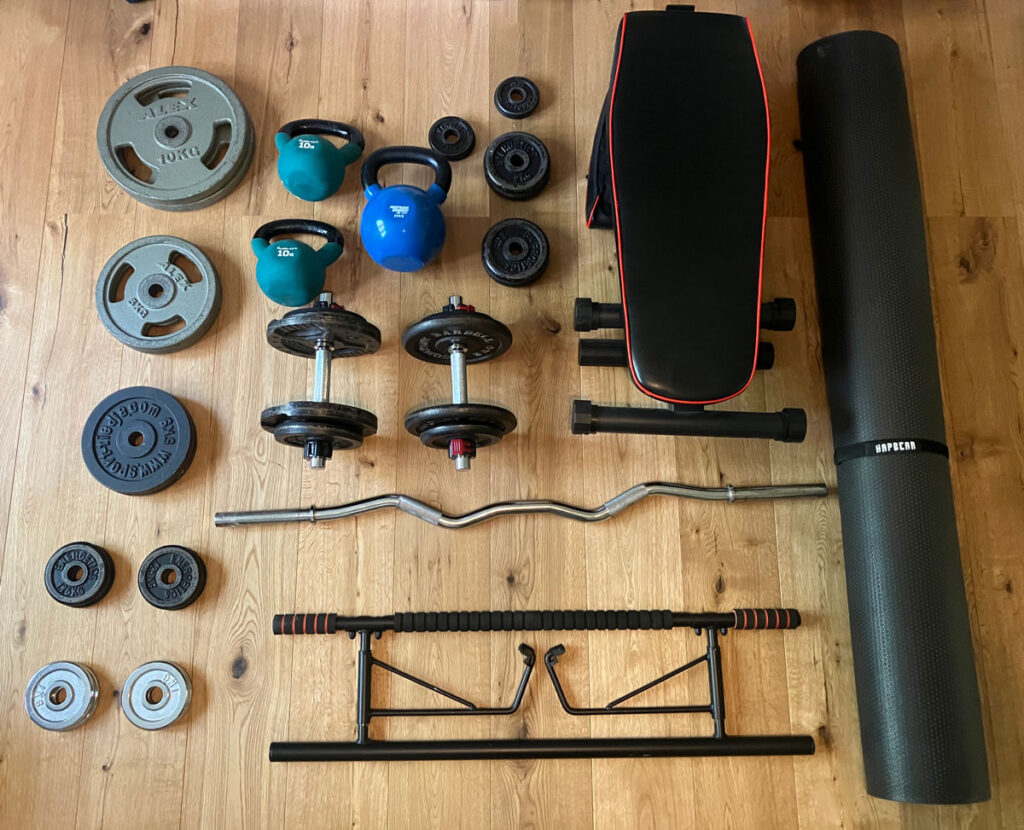
There are many options out there, so you’re sure to find something you like. And if your exercise level is currently zero, simply walking is a great way to get started.
Just a caveat: If you are the obsessive kind (many people with tinnitus are), try to avoid making exercise another stressor in your life, where you force yourself to be super disciplined and always give 100%. In my experience, balance and consistency is more important than volume or intensity.
2. Use Hearing Protection
One of the best things you can do as a person living with tinnitus is carry hearing protection with you everywhere. Your ears are already stressed and you don’t want to put any more strain on them. Loud noise often worsens tinnitus and protection is an easy, affordable way to guard against further damage.
I have a little box attached to my key chain with ear plugs I had custom-made by an audiologist.
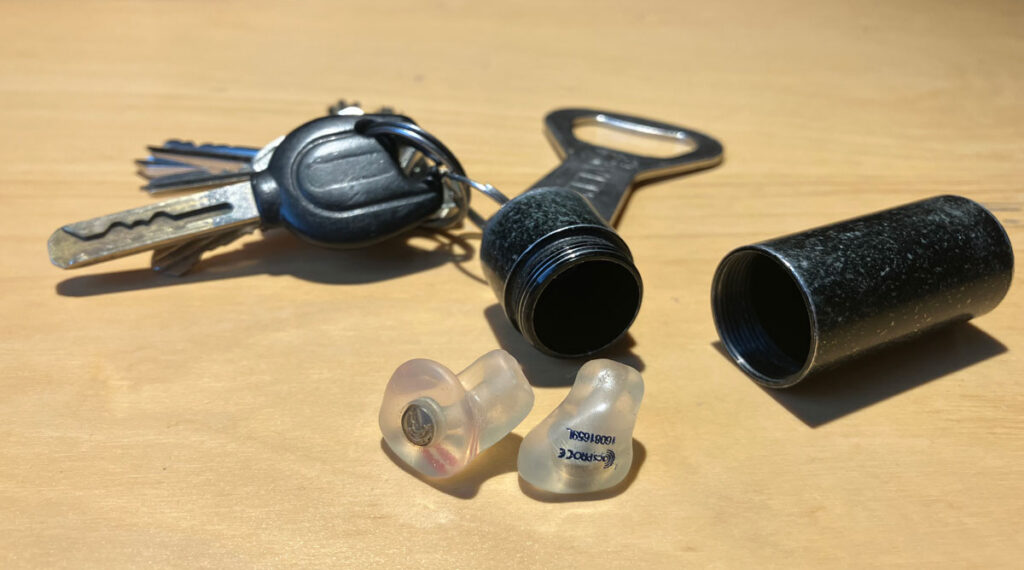
It’s what a lot of musicians use. It means your hearing protection is molded after your ear canal so you have a good fit. Plus, it’s equipped with filters that reduce the loudness without muffling the sound (which is what a lot of foam-based hearing protection does).
This solution cost me about 100 bucks. But you don’t have to go that route. There’s also plenty of cheaper ear plugs that offer protection without making you tone deaf in the process. In the past, I’ve used Senner MusicPro and Alpine PartyPlug (which, frankly, sounds a lot like a sex toy) with great success.
Pop them in whenever your ears feel strained. Besides concerts, I use mine in noisy bars or on public transportation when I need a breather from the sounds around me. Ear plugs are very unobtrusive, most people don’t even notice them.
3. Sleep Regularly
Besides general wellbeing, people with tinnitus quickly figure out that sleep usually has a big impact on the intensity of their condition. It should, therefore, be a priority.
Now, this is a weak point of mine. Sleep is something I’ve struggled with for most of my life, so I’m not the best at giving advice for how to fix yours. At the same time, I have experimented with many solutions, so here are some things that have worked for me:
- Have regular bed times: Go to sleep and wake up at roughly the same time every day. It helps regulate your internal clock, so you get tired at the right time and fall asleep faster.
- Get daylight exposure: Your eyes have receptors that can tell what time of day it is from the sunlight. The problem is they don’t work through window panes. Being out in daylight for at least 20-30 minutes per day helps regulate your circadian rhythm so you get tired at night.
- Try melatonin: The sleep hormone is available over the counter in most countries. I find it helpful to fall asleep faster when I’m wired. Valerian, lavender, passion flower, and other natural calming remedies also work for me.
- Read something light before bed: You already know you shouldn’t be looking at your phone screen right before sleeping. Reading something mindless, like science fiction or fantasy (check out the The Expanse series!), really helps me wind down. I also listen to audiobooks and sketch at the same time (because I need something to do with my hands).
- Write down your thoughts: If your mind is racing when you’re trying to get some shut eye, place a notebook and pen on your nightstand. Write everything down that comes to your mind. This gets it out of your head without getting lost.
If tinnitus itself keeps you awake, try using a white noise machine or app to mask the sound. Even a fan can help.
4. Meditate
Meditation is one of those things that really help me quiet down my mind and tinnitus. I used to do it regularly but now only rely on it as needed. The great thing about it is that you don’t need equipment for it and you can meditate pretty much anywhere and anytime.
There are many free YouTube videos out there for an introduction to meditation or guided meditation sessions. Here’s one example:
By loading the video, you agree to YouTube’s privacy policy.
Learn more
Two apps that I recommend are Headspace (which also made the video above) and Waking Up. I have more experience with Headspace, but they are both excellent (even if they are not free).
Fun fact: The creator of Waking Up, Sam Harris, has tinnitus himself. Is that a fun fact? I’m not sure.
5. Don’t Isolate Yourself, Have a Social Life
Tinnitus can make you feel disconnected. It can be quite distracting, including in social situations. You may not want to be the person who is complaining about their struggles or who is constantly preoccupied. Whatever the reason, sequestering yourself is a bit of a recipe for disaster.
People are social animals — we need contact with others for our wellbeing. I’m an extrovert, so being around other people is essential for me. I’ve noticed my tinnitus and stress levels often improve after spending time with friends or family.
So, don’t bury yourself at home, as tempting as it may be. Take initiative and make time to hang out with people. It’ll give you some much needed social comparison and opportunity for getting shit off your chest. You don’t have to be the life of the party, just be there, see what being human is all about.
And if you tell yourself, “I’ll do it when I feel better,” rephrase it to: “I’ll do it in order to feel better.”
If you want extra points, combine socializing with an activating activity, like bowling, playing darts, board games, poker, going for a walk, or anything else that has built-in movement. Which brings me to my next point.
6. Do Things You Enjoy
There’s no better recipe for forgetting about your tinnitus than getting lost in activities that are fun, relaxing, and make you feel good. I actually have a list of activities on my phone that I like, in case I draw a blank when I want to plan something. Here are some ideas to get you started:
- Cook or bake something delicious
- Try out a new cafe or restaurant
- Hang out with friends at a bar
- Do a pub crawl
- Play a musical instrument
- Go to the movies
- Attend a stand-up comedy gig
- Play cards/host a game night
- Take a class (e.g. cooking, improv, stand-up)
- Visit a sauna
- Go bowling
- Take part in a group sport (soccer, beach volleyball, martial arts, etc.)
- Have a picnic
- Go slacklining
Take a few minutes to brainstorm your own list of activities you love. After that, it’s a matter of planning and scheduling it.
I know it can be hard to motivate yourself to do fun things when your tinnitus is loud, but pushing through to engage in activities you love can actually help quiet the noise in your head. Start small — one activity a week — and see where it takes you.
7. Massage Your Head and Neck
This idea came to me when I read an article about how tinnitus can be caused by neck problems. It’s also something that empirically works for me, at least for the hissing and low-tone buzzing in my head. Plus, an ENT doctor recently told me during an ear checkup that low-noise hums often come from tight neck muscles or a blocked upper spine. It’s definitely worth a try.
What I do is simply massage my head and neck with my fingers or a plastic massage ball. I focus especially on my temples, where the jaw muscle is attached, which can be a bit tight for me. Other areas are the base of the skull, where it meets the neck, and I also massage the muscles on the side of my neck from the front.

In fact, I have a number of muscles in those areas that tend to be tense and painful, so I push on them to a level of discomfort I can tolerate until they start relaxing. That’s basically what physiotherapists do.
Speaking of which, if you have the option, you can of course also get someone else to do the massaging. At least in Germany, it’s possible to get a prescription for physiotherapy from your GP so the health insurance takes over most of the cost. Check what’s possible in your country.
8. Learn to Say No
This is another difficult one for me and my guess is that many people who have tinnitus are in the same boat. It’s exhausting and stressful to constantly agree to things you don’t want to do or take on other people’s agendas. That’s why it’s essential to protect yourself and your energy.
A book I can recommend that teaches assertiveness techniques is “When I Say No, I Feel Guilty” by Manuel J. Smith.
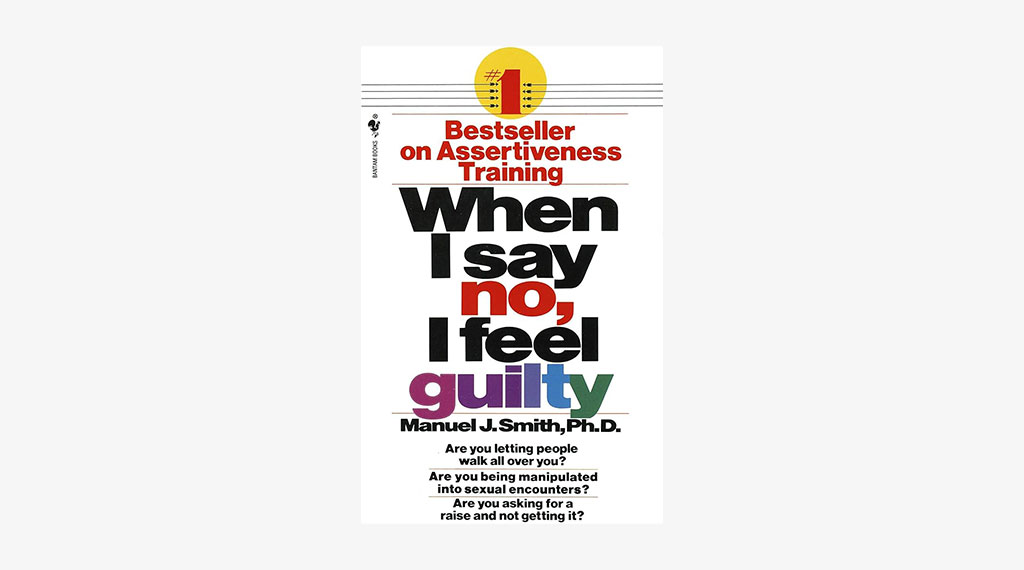
For example, it teaches you the “broken record” technique, calmly repeating your answer until the other person accepts it. For example:
- “Hey, can you help me move this Saturday? I really need an extra set of hands.”
- “I’m sorry, but I can’t this time.”
- “Come on, it’ll only take a couple of hours!”
- “I’m sure it will, but I can’t this time.”
- “Please? I’ll make it up to you.”
- “I appreciate the offer, but I can’t this time.”
If you are struggling with a flat-out “no,” it can be a good idea to have some phrases in your repertoire that buy you time and space to make up your mind, like:
- “Let me check my calendar.”
- “Please give me some time to think about it.”
- “I’m generally interested, let me see if I can make it.”
- “I need a moment to consider this, I’ll let you know.”
- “I don’t know if I’m available then, give me a moment to figure that out.”
- “That sounds interesting. Let me talk to my partner about it.”
It’s not necessarily a skill you learn immediately. You can start practicing it in small, risk-free ways, like politely declining requests from shop clerks or people asking for donations on the street. Scale up from there.
9. Avoid Caffeine
This is controversial, since there are medical studies that say caffeine does not exacerbate tinnitus and may, in fact, protect against developing it. At the same time, a subset of people (6% according to one study) experience a worsening of their tinnitus with caffeine and I appear to be among that group.
It’s a shame, because I love coffee and I miss it dearly. However, at some point I had to admit to myself that it wasn’t doing my stress level, anxiety, and ears any favors and ditched it.

I drink peppermint tea instead or use one of the many non-caffeinated coffee replacements like chicory root or barley powders. They don’t taste exactly like coffee, but they scratch the dark-and-bitter-drink itch.
Why not just drink decaf, you ask? Well, I tried that — turns out, the thing I love about coffee is not the taste, but the caffeine.
Your tinnitus may also be negatively affected by the stimulant, so consider taking a break from it and see what happens.
10. Go to Therapy
I’ve been to therapy several times in my life. It’s a great way to get an outside perspective on your struggles and ways of coping with them. Someone who isn’t as close to your life as you often has a more objective idea on how to improve it.

A therapist can help you spot unhealthy patterns in your thinking or behavior and work with you to change them. This can be especially helpful for managing tinnitus, for example, through:
- Developing healthier coping mechanisms and reducing stress.
- Relating to your hearing condition differently.
- Getting to the root of difficult feelings.
- Building resilience.
- Improving your sleep hygiene.
- Setting boundaries and navigating relationships.
- Providing accountability and emotional support.
All of this can help you deal better with your hearing condition, improve your perception of it, as well as address the types of thinking and behavior that may have contributed to developing it in the first place.
If you are having a difficult time and you can afford it, I highly recommend it. Don’t hesitate to try a few therapists until you find someone you click with.
11. Contribute to the Cure
One of the worst things about living with tinnitus is that there is no reliable cure for it — yet. While medical breakthroughs happen every day, it can often seem like this is an area that’s stagnating. I would know, I’ve waited for a tinnitus cure for 20 years.
If you want to feel more optimistic that progress is being made, I recommend checking out the Tinnitus Research subreddit. It collects and discusses all the study and drug trial results happening in this area.

The subreddit is also where I learned about Tinnitus Quest, a non-profit funding promising research by pooling community donations. They have already given out research grants in the amount of $230,000 (half of the collections so far) and aim to raise $1 million overall in 2026. Tinnitus Quest is run by fellow people with tinnitus, who actively engage with the community to collect input where the money and their effort should focus.

I have already chipped in and will do so again in the future. Other organizations worth supporting are RNID and the Hearing Health Foundation. You can donate to all of them right on their websites.
Breakthroughs happen all the time. Let’s be a part of the solution and benefit from it when it arrives.
Living With Tinnitus Sucks Sometimes — But Your Life Doesn’t Have to
Tinnitus can be a bit of a bitch, I’m not going to lie. Like everyone else, I wish I didn’t have to deal with it, but I do, so there’s that.
Fortunately, we are not helpless. There are many things you and I can do to make our lives better, even in the face of an annoying ear condition. The key is to actually take action. You never know what’s going to make a difference for you and your quality of life.
Pick a strategy, try it out, see what it does for you, and take it from there. Try things out without judgment. If something doesn’t work for you, that’s ok, just move on to the next thing.
The goal is to make sure tinnitus doesn’t become your whole life. You may have noticed that in this entire 5000+ word blog post, I did not once use the word “tinnitus sufferer.” That’s because tinnitus doesn’t have to define you. It’s a part of my life, but it’s not my whole story — and it doesn’t have to be yours either.
Are you a fellow tinnitus haver? Say hi in the comments and share what helps you deal with it, so this post can be as useful as possible for everyone.
Leave a Reply